

Chronic Pain: Causes, Symptoms, and Treatment Options
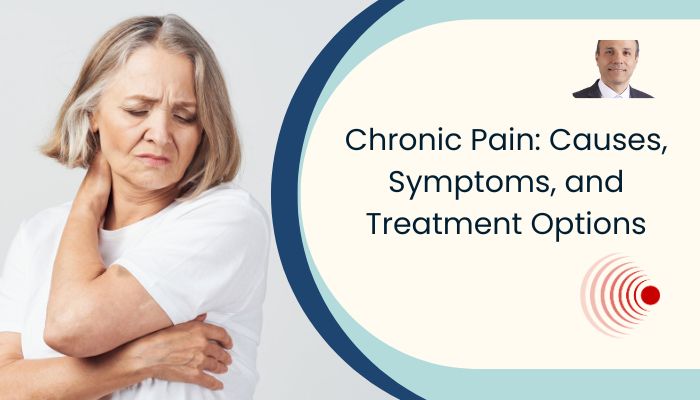
If you are reading this, you likely know that pain is more than a momentary sensation; it is a relentless, debilitating force that can strip away your quality of life, limit your mobility, and affect every personal relationship.
We understand this profound challenge at Pain Clinic by Dr Mohamed El Toukhy. Our mission, led by Dr Mohamed El Toukhy, is to move beyond temporary fixes and offer personalised, precise solutions for lasting relief.
We know that navigating the world of persistent discomfort can feel isolating. This comprehensive guide will explore the nature of chronic pain, detailing its underlying causes, diverse symptoms, and the advanced interventional strategies we use to help patients reclaim their lives.
What is Chronic Pain? A shift from symptom to disease
To truly address persistent discomfort, we must first define it. The critical question, “What is chronic pain?”, is answered by its duration and impact on the nervous system.
Unlike acute pain, the body’s natural, temporary alarm system signaling immediate injury (like a broken bone), chronic pain is generally defined as any pain that persists for three to six months or longer. Chronic pain eventually evolves from a symptom into a complex, independent condition.
This neurological shift means that even after the original injury has healed, the nerves, spinal cord, and brain remain “stuck” in an exaggerated pain cycle.
The persistent signals lead to changes in the structure and function of the central nervous system, a phenomenon known as central sensitisation. Recognising this neurological complexity is the foundation of effective chronic pain management.

The Many Faces of Chronic Pain
We categorise chronic pain in various ways, often based on its cause or location. Understanding the types of chronic pain helps us pinpoint the most effective treatment plan:
- Nociceptive pain: Tissue injury, like that seen in arthritis or mechanical chronic back pain, is the direct cause of nociceptive pain.
- Neuropathic pain: When the pain originates directly from nerve damage—as is the case with sciatica and diabetic neuropathy—it is termed neuropathic pain.
- Mixed pain: A combination of both nociceptive and neuropathic elements (widespread in conditions like failed back surgery syndrome).
What Medicine Is Used in a Trigger Point Injection?
Identifying what causes chronic pain is rarely simple. It often originates from a poorly resolved acute injury or underlying inflammatory condition. Patients most often come to our clinic for specialised help due to the following frequent causes:
- Musculoskeletal issues: Degenerative disc disease, herniated discs, spinal stenosis, and osteoarthritis are primary drivers of chronic back pain and chronic neck pain.
- Failed healing: Post-surgical pain or injuries (such as whiplash or nerve trauma) where the tissues have healed, but the pain signals have not subsided.
- Nerve entrapment or damage: Conditions like sciatica (where the sciatic nerve is compressed) or peripheral neuropathy.
- Inflammatory conditions: Autoimmune disorders like Rheumatoid Arthritis or localised inflammation in tendons and joints.
- Generalised pain disorders: Conditions such as Fibromyalgia, which cause widespread, persistent chronic muscle pain and fatigue. When pain becomes chronic, looking beyond the original trigger and treating the resulting nervous system hypersensitivity is essential.
Symptoms and location- Specific pain syndromes
The general symptoms of chronic pain extend far beyond the painful sensation itself, often including profound fatigue, sleep disruption, mood changes (anxiety and depression), and reduced physical function.
At Pain Clinic by Dr Mohamed El Toukhy, we frequently treat specific location-based syndromes:
Chronic back pain & Chronic neck pain
These are two of the most common complaints, often caused by facet joint arthritis, degenerative disc disease, or nerve root compression.
The pain can be localised, radiating (like sciatica), or cause severe stiffness that limits turning and bending. We treat all forms of chronic back pain through targeted interventional procedures to alleviate pressure and reduce inflammation.
Chronic muscle pain (Myofascial pain)
This pain is characterised by tender “trigger points” within the muscle fascia. It is a deep, aching, or burning sensation, often leading to restricted movement and tension headaches. This is highly responsive to trigger point injections and targeted therapy.
Chronic pelvic pain (CPP)
A severe and often poorly diagnosed condition, chronic pelvic pain is common in both men and women.
It can stem from gynaecological issues, musculoskeletal problems, nerve entrapment (like pudendal neuralgia), or internal inflammation. Due to its complex, hidden nature, CPP requires a highly specialised diagnostic and treatment approach.
How is chronic pain diagnosed? Precision is key
The diagnostic process for chronic pain requires far more than standard imaging. How is chronic pain diagnosed at our clinic? We utilise a multi-step approach focused on isolating the exact pain generator:
- Detailed history and physical exam: A thorough review of your medical history, pain duration, and precise mapping of the pain’s location and characteristics.
- Advanced imaging: Using MRIs and CT scans to identify structural issues like disc herniations or spinal stenosis.
- Diagnostic injections: The most accurate tool. We can temporarily block the pain by injecting a local anaesthetic near a suspected nerve or joint. If the patient experiences significant relief, it confirms that a nerve or joint is the primary pain source. This precision guides the subsequent treatment of chronic pain.
Advanced Treatment for Chronic Pain management
Effective chronic pain management is a comprehensive process. It is never a single injection or pill but a carefully coordinated, personalised plan.
Dr Mohamed El Toukhy specialises in interventional pain medicine, using minimally invasive, image-guided techniques to deliver powerful, lasting relief directly to the source of the pain.
Interventional pain procedures: Our core focus
Our philosophy is to minimise reliance on systemic medications by precisely targeting the neurological structures causing the pain. These interventional procedures form the backbone of our treatment for chronic pain:
Epidural steroid injections (ESI)
Epidural steroid injections for chronic pain are a cornerstone treatment, particularly effective for treating nerve root inflammation caused by disc herniation or spinal stenosis.
During this procedure, Dr Mohamed El Toukhy injects a powerful anti-inflammatory medication (steroid) into the spine’s epidural space, where the irritated nerves are located. This rapidly reduces swelling and inflammation, often providing significant relief from radiating pain in the arms or legs (sciatica).
Facet joint injections and Medial branch blocks
The facet joints are the small joints on the sides of the vertebrae that allow the spine to bend and twist. Arthritis in these joints is a significant cause of chronic back pain and chronic neck pain.
Facet joint injections for chronic pain place anti-inflammatory medication directly into the joints to reduce inflammation. Medial branch blocks are diagnostic and therapeutic injections targeting the small (medial branch nerves) that transmit pain signals from the facet joints.
If a block is successful, the patient may be a candidate for radiofrequency ablation (RFA), a minimally invasive procedure that provides long-term relief by safely interrupting the pain signals.
Spinal cord stimulation (SCS)
For complex, severe, and refractory pain conditions, such as failed back surgery syndrome, Spinal Cord Stimulation offers a revolutionary option.
This device delivers gentle electrical impulses to the spinal cord, changing the pain signal before it reaches the brain. It replaces pain with a tingling sensation or, with newer technology, no sensation at all.
The multidisciplinary approach
While interventional procedures offer the fastest relief, we integrate them with other essential therapies for holistic chronic pain management:
- Physical therapy: It’s critical to re-establish strength, flexibility, and normal movement patterns to minimise the risk of chronic back pain recurrence.
- Medication management: Using non-opioid medications like nerve stabilisers and muscle relaxers to manage baseline pain and inflammation safely.
- Psychological support: Addressing the mental and emotional components of chronic pain, such as fear avoidance and depression, which are critical for long-term success.
Ready to move beyond the pain cycle?
If you are tired of merely managing your symptoms and are ready for a definitive, personalised plan to reclaim your quality of life, don’t wait another day. Dr Mohamed El Toukhy and the specialised team at Pain Clinic offer the advanced diagnostic and interventional expertise you need.
It’s time to stop letting chronic pain define your life. Take the first step toward lasting relief. Book an appointment now.
FAQs
Acute pain is a short-term signal lasting less than three months that alerts you to injury.
Chronic pain, however, persists for six months or longer, continuing after the injury has healed, and represents a disease state of the nervous system requiring specialised chronic pain management.
While there isn’t always a “cure,” advanced interventional treatments can provide significant, long-lasting relief and functional restoration.
Procedures like Epidural steroid injections for Chronic pain and Radiofrequency ablation (following Facet Joint Injections for chronic pain) offer effective, targeted chronic back pain treatment solutions far beyond basic medication.
Chronic pelvic pain requires a specialised, multidisciplinary approach. Treatment can include targeted nerve blocks (like pudendal blocks), physical therapy, medication to manage nerve pain, and spinal cord stimulation in some complex cases.
Chronic muscle pain (or myofascial pain) often responds well to non-surgical treatments such as manual therapies, dry needling, and targeted trigger point injections, which release the painful knots in the muscle tissue.
Not necessarily. Dr Mohamed El Toukhy’s philosophy is to first exhaust all non-surgical and minimally invasive options. Interventional procedures are designed to provide the benefits of targeted relief without the risks and recovery time associated with major surgery.
Related Blogs

Sciatica pain symptoms: Early signs you should never ignore
Sciatica pain symptoms: Early signs you should never ignore Sciatica

Ankle Pain Causes You Shouldn’t Ignore
Ankle Pain Causes You Shouldn’t Ignore Most people have ankle

What Causes Migraines?
What causes migraines? What causes migraines? Understanding the triggers, symptoms