

Middle Back Pain: Causes, Symptoms, and Treatment Options
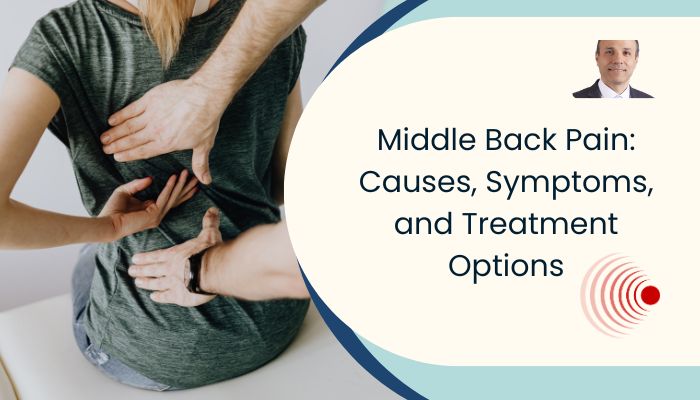
Are you struggling with pain in the middle of your back that worsens when lying down or during daily activities?
Middle upper back pain often develops from prolonged poor posture, muscle tension, or strain affecting the thoracic spine and surrounding soft tissues.
Middle back pain (upper–middle to lower-middle back pain) involves the thoracic spine, which anchors the ribs and protects the heart and lungs.
Because this area is built for stability, middle-upper back pain is less common than neck or low-back pain, but it can become a painful condition when it strikes.
This guide explains middle back pain causes, hallmark symptoms, red flags, and treatment, from self-care and exercises to interventional options. It also provides practical tips on how to relieve middle back pain and how to sleep with middle back pain.
What is Middle Back Pain?
Clinically, the “middle” refers to the thoracic spine (T1–T12), which has 12 vertebrae, shock-absorbing discs, and a complex network of muscles and ligaments.
Irritation, strain, or disease in any of these structures can trigger pain in the middle back (sometimes felt as upper middle back pain if closer to the shoulder blades, or lower back pain nearer the thoracolumbar junction).
Because the thoracic cage stabilises this region, pain here often reflects muscle/ligament strain. However, joint wear, disc problems, or nerve irritation may also be involved.

Middle Back Pain Symptoms
- Dull ache, stiffness, or sharp “knife-like” pain in the middle of the back, sometimes wrapping around the ribs.
- Burning/tingling, occasional numbness if a thoracic nerve is irritated (thoracic radiculopathy).
- Pain on specific movements, deep breaths, coughing, or sneezing.
- In severe cases, such as leg weakness, altered balance, or bladder/bowel changes, seek urgent care.
Middle Back Pain Causes
1. Strain and overuse
Lifting awkwardly, long hours at a desk, or new gym routines can strain the rhomboids, trapezius, and paraspinal muscles, causing pain in the middle back and stiffness. Poor posture adds load and can tighten supporting muscles.
2. Joint and disc problems
Facet joint osteoarthritis and degenerative discs may trigger upper-middle back pain or local tenderness.
Herniated thoracic discs are less common than neck/low-back herniations but can cause band-like chest/rib pain or numbness.
3. Spinal canal narrowing (spinal stenosis)
Narrowing around the cord/nerve roots can cause pain, tingling around the trunk, and, if severe, leg symptoms can appear.
4. Posture and deconditioning
Prolonged static postures and weak core/back muscles increase thoracic load. Improving ergonomics and movement variety is protective.
5. Osteoporosis and vertebral fracture
Fragile bones can compress and fracture, producing sudden, focal middle back pain on the left or right side. After a minor strain, urgent assessment is warranted.
6. Scoliosis and structural curvature
Spinal curves redistribute forces, sometimes causing pain in the middle of back with activity or fatigue.
7. Referred pain from organs
Conditions in nearby organs can mimic middle right back pain or female back pain right side middle, e.g.:
Kidneys (stones/infection) cause middle-back pain, urinary symptoms, fever.
Gallbladder (gallstones) cause right-sided back and shoulder-blade pain after fatty meals.
Pancreas (pancreatitis) can cause upper abdominal pain radiating to the back, worsening after eating.
Pain in the middle of the back may indicate muscular fatigue, joint stiffness, or, in some cases, an underlying spinal condition that requires professional evaluation.
Most middle back pain causes are not serious and improve with active self-care.
However, night pain, unintentional weight loss, fever, trauma, progressive neurological signs, or new incontinence are red flags to seek medical help promptly.
How lifestyle and technology are changing the pattern of middle back pain
In today’s digital era, middle back pain is increasingly linked to physical strain and how we live, move, and interact with technology. Prolonged device use, stress, and lack of natural movement have reshaped how often people experience discomfort in the thoracic spine.
1. Screen time and “Tech Posture”
- Hours spent on laptops and phones promote a rounded-shoulder, forward-head posture, placing excess stress on the middle back.
- This “tech posture” shortens chest muscles and weakens the stabilising muscles between the shoulder blades.
- Over time, it leads to upper and middle back pain, shoulder stiffness, and even tension headaches.
2. Sedentary work patterns
- Remote work and desk-based jobs often mean minimal movement throughout the day.
- Lack of mobility reduces spinal fluid circulation and weakens supporting muscles, increasing the risk of lower middle back pain.
- Micro-movements such as standing to stretch, shoulder rolls, and deep breathing can counteract this effect.
3. Emotional and mental load
- Continuous multitasking, digital fatigue, and stress heighten muscle tension through hormonal pathways.
- This physically manifests stress in the thoracic spine, causing tightness and stiffness that mimic musculoskeletal pain.
4. Redefining prevention in a digital world
- Set an hourly reminder for posture checks and gentle movement.
- Keep screens at eye level and adjust chairs for spinal neutrality.
- Balance technology with outdoor activities and mindful breaks to reset the body’s natural alignment.
As technology becomes integral to daily life, middle back pain has evolved from a physical issue to a lifestyle-driven condition. Awareness and small, consistent adjustments can go a long way in preserving long-term spinal health.
Middle back pain when lying down
If your middle back pain worsens at night, check mattress support (too soft or sagging), pillow height (excessive thoracic kyphosis stress), and sleep posture. Pain that is night-dominant or unrelenting can be an alarming signal.
Middle right back pain vs. sudden middle back pain left side
Side-specific pain can be mechanical (muscle strain, facet joint irritation), but also consider kidney or gallbladder for the right, and fracture or pancreatic referral for sudden left-sided pain, especially if accompanied by systemic symptoms (fever, nausea, urinary changes).
Female back pain right side middle
Women can be affected by upper and middle back symptoms due to posture, breast size, pregnancy, and peri and post-menopausal changes in muscle strength and bone density.
Tailored physiotherapy, posture education, and bone health screening can help.
How is middle back pain diagnosed?
Persistent pain in the middle back should not be ignored. Early diagnosis and targeted treatment can prevent chronic discomfort and restore mobility.
A clinician will review your history (onset, triggers, red flags), examine posture, range of motion, rib mobility, and perform neurological tests.
Imaging (X-ray, MRI) is not always required initially unless indicated or symptoms persist.
Tests may confirm radiculopathy and direct middle back pain treatment if nerve involvement is suspected.
Middle back pain treatment
First-line self-care
- Keep moving: Gentle mobility within comfort beats bed rest.
- Heat or ice: Alternate to settle pain and spasm.
- Over-the-counter analgesia: Short courses of NSAIDs can reduce pain and swelling.
- Activity breaks & ergonomics: Vary posture; set a 30–45-minute movement timer; adjust screen height and chair support.
- Targeted stretching & strengthening: Thoracic mobility plus core work improves support.
Exercise, graded activity, and selected medicines relieve back pain; passive treatments rarely fix pain. Individualised plans work best.
Guided rehabilitation
If symptoms persist over 2–4 weeks, a physiotherapist can design a programme combining thoracic mobility, scapular stabilisers, and core endurance while addressing fear of movement and pacing.
Interventional pain management
When nerve irritation, facet pain, or disc pathology is diagnosed, interventional options may be considered with a specialist:
- Trigger point or facet joint injections
- Epidural steroid injections (selected cases with nerve inflammation)
- Medial branch blocks / radiofrequency denervation for confirmed facet-mediated pain
- Advanced imaging-guided procedures are used where appropriate.
Selection depends on diagnosis, response to rehab, and shared decision-making.
Surgery
When the structural issues fail to respond to conservative care, surgery is indicated.
Types of surgery for the middle back:
- Discectomy: People with a herniated disc need a discectomy to remove the injured part of the disc and prevent further damage.
- Spinal fusion: A fusion procedure that involves joining two vertebrae and using a spacer to replace damaged discs.
- Laminectomy: The back wall of a vertebra (the lamina) is removed to decompress the spinal cord.
Laminotomy: A portion of the lamina is removed to treat a pinched nerve.
How to relieve middle back pain
Daily routine (10–15 minutes):
- Thoracic opener (foam roller over upper back)
- Seated or floor “thread-the-needle”
- Cat–cow pose
- Scapular squeezes (band pull-aparts)
- Front plank (knees or toes)
These moves mobilise ribs and thoracic joints while strengthening support musculature, consistent with clinical advice to stretch/reinforce and keep active.
Workday habits:
- Micro-breaks every 30–45 minutes.
- “Ear-over-shoulder” neck alignment and relaxed shoulders.
- Hips higher than knees; feet flat; screen at eye level.
Lifestyle pillars:
- Build steps/low-impact cardio (walking, swimming).
- Sleep 7–9 hours; manage stress (breathing, brief mindfulness).
- Bone and muscle health: adequate protein, vitamin D, and calcium if needed.
How to sleep with middle back pain
- Try side-lying with a small pillow between your knees to keep your spine neutral or on your back with a pillow under your knees.
- Use a medium-firm, supportive mattress; consider placing a folded towel under the mid-back for short periods to support the natural curve if you are very kyphotic.
- Keep a small pillow under the upper arms when side-lying to offload the shoulder blade area.
- If pain wakes you consistently at night, get reviewed.
When to seek medical help
Book an urgent assessment if you experience the following symptoms:
- New neurological symptoms (numbness/tingling around the trunk or legs, weakness, unsteady gait),
- Bladder/bowel changes,
- Fever, unexplained weight loss,
- History of trauma, cancer, or osteoporosis,
- Severe pain, worsening, or constant at night.
Why choose Dr Mohamed El Toukhy for middle back pain in Dubai?
With extensive experience in diagnosing and treating complex spine and nerve-related pain, he combines precision, compassion, and evidence-based techniques to deliver lasting relief.
- Focused diagnostics: Special interest in thoracic spine conditions, accurately distinguishing muscular strain from facet, disc, or nerve-related pain to ensure targeted treatment.
- Stepwise, evidence-based care: Emphasises education, posture correction, and rehabilitation first; uses medication judiciously; and recommends interventions only when required.
- Advanced image-guided procedures: Offers precise treatments such as facet joint blocks, epidural injections, and radiofrequency ablation for suitable middle back pain cases.
- Whole-person approach: Considers sleep, stress, and daily activity patterns, coordinating with physiotherapy and pain psychology for comprehensive recovery.
Safe and transparent care: Maintains clear communication and prompt escalation for alarming signs, fractures, or organ-related causes, ensuring patients receive timely, appropriate care.
Your journey to a healthier, pain-free back
- Most middle back pain causes are mechanical and settle with sensible, active self-care.
- Use movement, heat or ice, short-term medicines, and progressive exercises to relieve middle back pain.
- Watch for relating symptoms side-specific organ causes (kidney/gallbladder/pancreas) if symptoms are not correlating with a musculoskeletal pattern.
If pain persists, a structured rehab plan plus specialist review can clarify diagnosis and tailor middle back pain treatment, ranging from physiotherapy to image-guided interventions, when needed.
Restoring comfort and mobility: the way forward
If pain in the middle of your back is limiting your life, book an appointment with Dr Mohamed El Toukhy in Dubai for a careful diagnosis, conservative care, and targeted interventional options so you can move with confidence again.
Timely care and the right treatment can help you overcome middle back pain and regain quality of life.
FAQs
Most often, muscle or ligament strain, posture overload, or joint/disc irritation in the thoracic spine. Less commonly, stenosis, fracture (osteoporosis), scoliosis, or referred pain from organs like the kidneys or gallbladder.
It may be anything from a dull, nagging ache to sharp, band-like pain; it may worsen with twisting, deep breaths, or specific postures. Tingling or numbness suggests nerve involvement.
Be active, use heat or ice compression, try short courses of NSAIDs if suitable. Begin with mobility plus core/scapular strengthening. If the condition does not improve in 2–4 weeks, get assessed.
Worsening night pain or pain with fever, weight loss, or neurological signs needs medical review.
Women may experience thoracic pain related to posture, breast size, pregnancy, or bone density changes; a tailored rehab plan and bone health review can help.
If you are osteoporotic or have had even a minor fall or a twist, consider an urgent assessment. Other causes can include a muscle spasm or referred visceral pain.
Only when a specific structural problems (e.g., herniated disc compressing the nerves) or failure of conservative treatment, you may require surgery.
Related Post

Sciatica pain symptoms: Early signs you should never ignore
Sciatica pain symptoms: Early signs you should never ignore Sciatica

Ankle Pain Causes You Shouldn’t Ignore
Ankle Pain Causes You Shouldn’t Ignore Most people have ankle

What Causes Migraines?
What causes migraines? What causes migraines? Understanding the triggers, symptoms