Radiofrequency ablation for Lumbar facet joint pain

toukhy 1Radiofrequency ablation for Lumbar facet joint pain

Lower back pain can quietly take over your daily life,  limiting movement, disrupting sleep, and making even the simplest activities difficult. 

For many, this discomfort originates in the small joints of the spine, known as facet joints. 

When these joints become inflamed or irritated, they can lead to chronic, localised pain that doesn’t always respond to conventional treatments.

This is where Radiofrequency Ablation offers a highly effective, minimally invasive solution. Designed to target the source of pain rather than mask symptoms, this advanced treatment is increasingly recommended for patients with facet joint-related back pain who are seeking long-term relief without surgery.

Understanding Lumbar facet joint pain

Facet joints are located at each segment of the spine, helping to stabilise movement and support flexibility. 

Over time, due to ageing, injury, or degenerative conditions such as osteoarthritis, these joints can become a source of chronic pain.

Common symptoms include:

  • Persistent aching in the lower back
  • Pain that worsens with twisting or bending
  • Localised tenderness
  • Reduced mobility or stiffness

When conservative treatments like physiotherapy, medications, or lifestyle changes fail to provide adequate relief, interventional procedures such as Radiofrequency Ablation may be considered.

Common Reasons for Lower Back Pain You Shouldn’t Ignore

What is Radiofrequency Ablation?

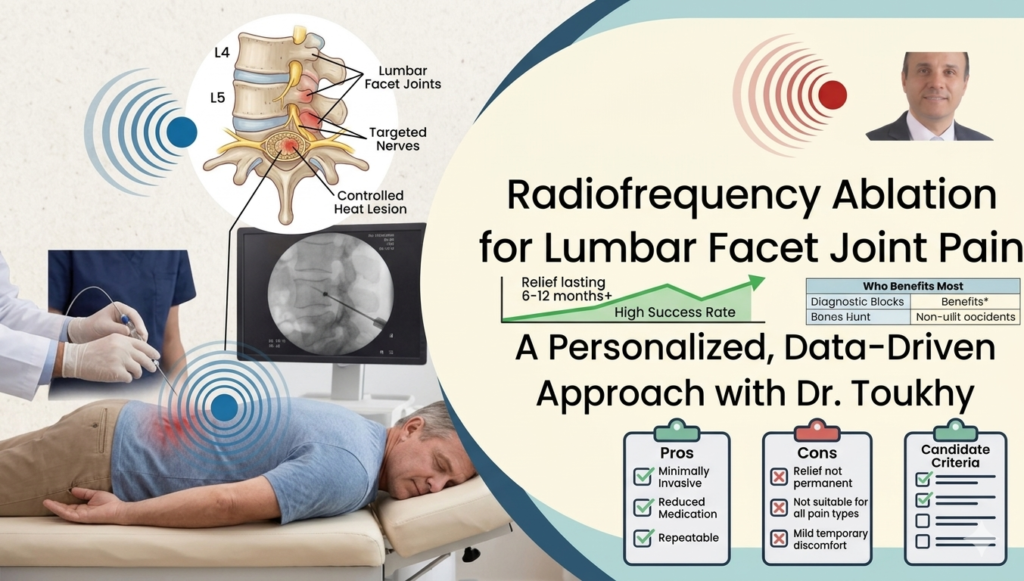
Radiofrequency Ablation is a simple procedure that uses heat from radio waves to target nerves that send pain signals from the affected facet joints.

How it works:

  • A specialised needle is guided to the target nerve using imaging technology
  • Radiofrequency energy is applied to create a controlled lesion
  • This disrupts the nerve’s ability to send pain signals to the brain

The procedure is performed under local anaesthetic and does not require hospital admission, making it a convenient option for many patients.

Lumbar Radiofrequency Ablation success rate

One of the most common questions patients ask is about the lumbar radiofrequency ablation success rate. 

Key insights:
  • Many patients experience pain relief lasting 6 to 12 months or longer
  • Success largely depends on accurate diagnosis and proper patient selection
  • Patients who respond well to diagnostic nerve blocks tend to have higher success rates

While the lumbar radiofrequency ablation success rate is generally favourable, it is important to understand that results may vary based on individual factors such as the severity of joint degeneration and overall health.

Facet Joint Ablation pros and cons: A balanced view

Like any medical procedure, it is essential to weigh the facet joint ablation pros and cons before making a decision.

Pros

  • Minimally invasive with no need for major surgery
  • Targets the source of pain directly
  • Eliminates or reduces the need for long-term medication
  • Resuming normal activities within days
  • Repeatable if pain returns

Cons

  • Pain relief is not permanent; nerves may regenerate over time
  • Mild discomfort or soreness after the procedure
  • Not suitable for all types of back pain
  • Requires precise diagnosis for optimal outcomes

Understanding the facet joint ablation pros and cons helps patients to make informed decisions in consultation with a pain specialist.

Who is an ideal candidate?

Radiofrequency Ablation is usually recommended for patients who meet the following criteria:

  • Have had chronic lower back pain for more than three to six months
  • Have confirmed involvement of the facet joints
  • Have felt temporary relief after receiving diagnostic nerve blocks
  • Have not had good results with conservative treatments

A careful assessment is important to see if this treatment is right for you and to help improve your chances of success.

What happens during the procedure?

The procedure requires 30 to 60 minutes and involves the following steps:

  • The patient is positioned comfortably, followed by cleaning of the treatment area
  • Local anaesthetic is administered to numb the area
  • Imaging guidance (such as fluoroscopy) is used to accurately place the needle
  • Radiofrequency energy is applied to the targeted nerve
  • The needle is removed, and dressing is applied

Patients are monitored for a short period before being discharged on the same day.

Recovery and results

Recovery from Radiofrequency Ablation is generally straightforward. Some patients experience mild swelling or discomfort at the treatment site, which resolves within a few days.

What to expect post-procedure:

  • Gradual reduction in pain over 1–3 weeks
  • Increased mobility and function
  • Reduced reliance on pain medications

It is important to follow post-procedure care instructions and attend follow-up appointments to monitor progress.

How long do the results last?

Pain relief from Radiofrequency Ablation is not permanent, as nerves can regenerate over time. However, many patients experience relief for several months to over a year.

If pain returns, the procedure can often be repeated with similar effectiveness, making it a sustainable option for long-term pain management.

Why accurate diagnosis matters

The success of Radiofrequency Ablation heavily depends on identifying the correct source of pain. Diagnostic nerve blocks are often used beforehand to confirm that the facet joints are indeed responsible.

This step significantly improves the lumbar radiofrequency ablation success rate and ensures that patients receive the most appropriate treatment.

A tailored approach to pain management

No two patients experience pain in the same way. That’s why a personalised, patient-centred approach is essential. Treatment plans may include:

  • Interventional procedures like Radiofrequency Ablation
  • Physical therapy and rehabilitation
  • Lifestyle modifications
  • Ongoing monitoring and support

Combining these strategies often leads to better long-term outcomes and improved quality of life.

Advanced pain relief with Radiofrequency Ablation by Dr El Toukhy

When it comes to managing chronic lumbar facet joint pain, expertise and precision make all the difference. Dr Mohamed El Toukhy, a UK-trained Consultant Anaesthetist and Pain Specialist in Dubai, offers a comprehensive, minimally invasive approach to pain management.

With a strong focus on identifying the root cause of pain, Dr El Toukhy designs individualised treatment plans that may include Radiofrequency Ablation to help patients avoid unnecessary surgery and regain control of their lives.

At his specialised pain clinic, patients benefit from:

  • Advanced diagnostic techniques
  • Evidence-based interventional treatments
  • A personalised, patient-first approach
  • A commitment to long-term pain relief and functional recovery

Take the first step towards lasting relief, book your consultation today.

FAQs

The procedure is generally well tolerated. Local anaesthetic is used to numb the area, and most patients report only mild discomfort during or after the treatment.

A nerve block is used as a diagnostic tool to confirm the source of pain, while Radiofrequency Ablation provides longer-lasting relief by disrupting pain signals. They serve different but complementary purposes.

Some of the potential drawbacks include temporary soreness, incomplete pain relief, or the need for repeat procedures as nerves regenerate. Reviewing the facet joint ablation pros and cons with a specialist is essential before proceeding.

Pain relief from facet joint ablation can last anywhere from 6 months to over a year, depending on individual factors and nerve regeneration.

Related Blogs