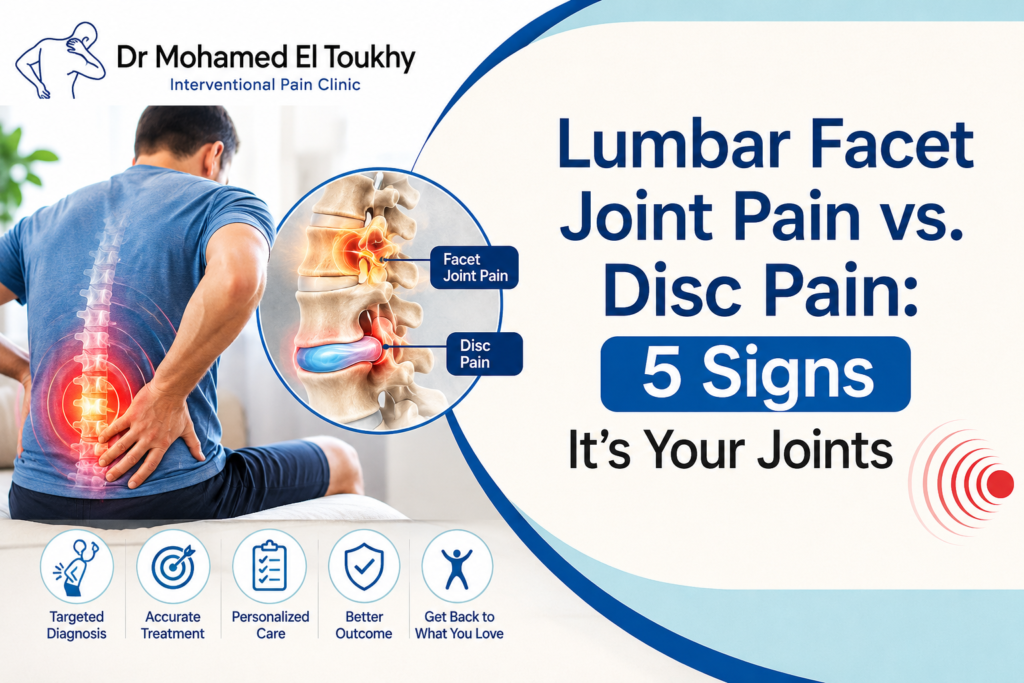
Back pain is a leading reason people require medical help, but figuring out the exact cause can be tricky. Dr Mohamed El Toukhy sees many patients who are unsure if their pain comes from a slipped disc or lumbar facet joint pain. Although these conditions can feel alike, the pain comes from different places, and the treatments are different too.
Lumbar facet joint pain starts in the small joints that help stabilise your spine. In contrast, disc pain comes from the soft discs between your vertebrae. Consulting with Dr Mohamed El Toukhy can help you identify the difference, enabling you to get the right treatment and avoid ongoing pain.
What is lumbar facet joint pain?
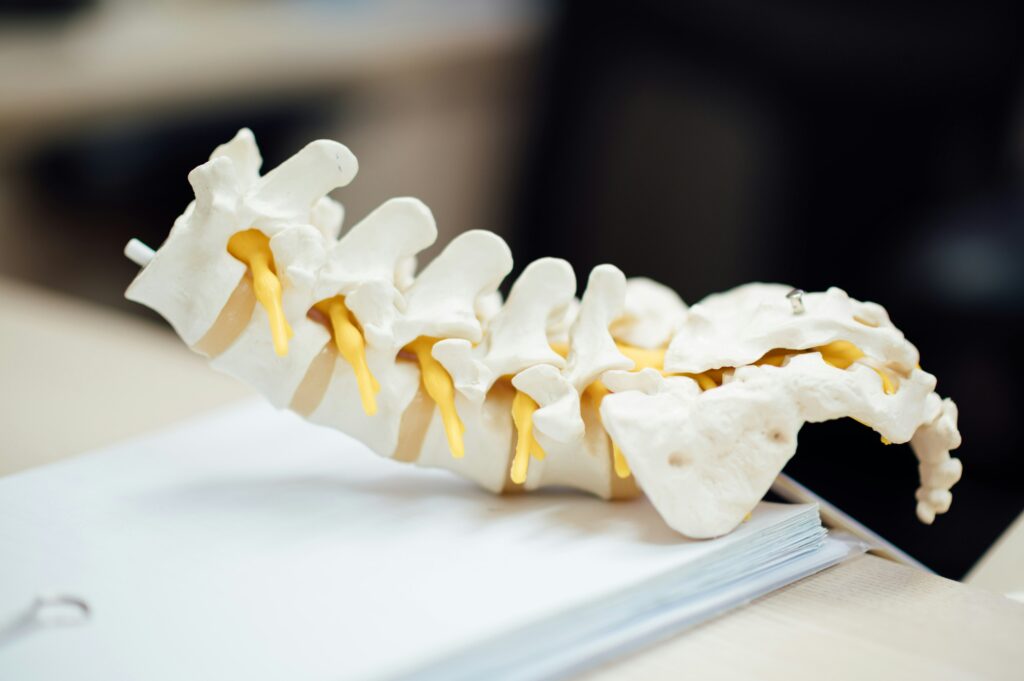
Lumbar facet joint pain happens when the facet joints in your lower back get irritated, inflamed, or develop arthritis. These joints help your spine move and stay stable, so when they are affected, even simple movements like bending or standing can hurt.
A growing number of patients are now diagnosed with lumbar facet joint pain treatment needs due to lifestyle factors such as poor posture, sedentary work, or age-related wear and tear.
Unlike disc problems, facet joint pain is usually mechanical. This means it often gets worse with certain movements and feels better when you rest.
Lumbar facet joint pain vs Disc Pain: Key differences
Knowing how these two conditions differ is important for getting the right treatment.
Facet Joint Pain:
- Pain is felt in a specific area of the lower back.
- The pain gets worse when the person arches their back or twists.
- There is stiffness in the lower back after periods of rest.
- Often linked with L4-L5 facet joint pain symptoms
- The pain may feel sharp or aching, depending on how the person moves
Disc Pain:
- Pain that can spread down the leg, known as sciatica.
- Worse when sitting or bending forward
- May involve nerve irritation or numbness
If your main symptoms are joint stiffness and pain that change with movement, you might have lumbar facet joint pain instead of a disc problem.
5 Signs : It’s lumbar facet joint pain
These are five common signs to recognise lumber facet joint pain :
- Pain worsens with extension or twisting
Activities like leaning backwards or rotating the spine often increase discomfort.
- Morning stiffness in the lower back
Many patients report stiffness that gradually eases with movement.
- Localised pain (not radiating down the leg)
Lumbar facet joint pain usually stays in the lower back, unlike disc pain, which can spread.
- Tenderness around the L4-L5 region
This is commonly associated with L4-L5 facet joint pain symptoms.
- Relief when sitting or bending forward
This is different from disc pain, which often gets worse when sitting or bending forward.
Lumbar facet joint pain Treatment: What actually works?
Getting the right diagnosis is the first step to effective treatment. Dr Mohamed El Toukhy, create a treatment plan tailored to each patient’s needs and considering how severe their condition of pain.
Common treatment approaches include:
- Targeted physiotherapy
- Facet Joint Injections to reduce inflammation and confirm the source of pain
- Radiofrequency Ablation (RFA) for longer-lasting pain relief by blocking pain signals
- Epidural Injections to reduce nerve irritation and lower back pain
- Personalised rehabilitation and pain management plans tailored to each patient
Modern lumbar facet joint pain treatment focuses not only on pain relief but also on enhancing mobility and preventing recurrence. Dr Mohamed El Toukhy combines precise diagnosis with evidence-based treatments to help patients return to daily activities with reduced pain and improved spinal function.
Facet joint pain exercises to avoid
Exercise is important for recovery, but doing the wrong movements can make your symptoms worse.
Common facet joint pain exercises to avoid are:
- Deep backbends or excessive spinal extension
- Heavy weightlifting with poor form
- High-impact twisting movements
- Unsupported yoga poses that strain the lower back
Safe exercises for recovery
Some movements should be avoided, but the right exercises can help you heal if performed properly. Some helpful exercises include:
- Gentle pelvic tilts
- Core strengthening exercises
- Controlled stretching routines
- Low-impact walking
A structured plan for lumbar facet joint pain exercises helps restore mobility and reduce long-term stiffness when supervised by a specialist.
Why accurate diagnosis matters
One of the main challenges in treating back pain is getting the right diagnosis. Facet joint pain is often mistaken for disc problems, leading to the wrong treatment.
Dr Mohamed El Toukhy uses a comprehensive clinical approach, often supported by imaging and diagnostic blocks, to confirm whether symptoms are truly linked to lumbar facet joint pain.
Early and accurate diagnosis ensures patients receive the right lumbar facet joint pain treatment instead of prolonged trial-and-error care.
Why choose Dr Toukhy for lumbar facet joint pain?
Dr Mohamed El Toukhy offers expert diagnosis and personalized care for lumbar facet joint pain and disc-related conditions. He uses advanced pain management and minimally invasive treatments to reduce pain, improve mobility, and help patients find lasting relief. Many people choose Dr Mohamed El Toukhy because:
- Expertise in diagnosing complex spinal and joint-related pain
- Personalized treatment plans for lumbar facet joint pain and disc pain
- Advanced minimally invasive pain management techniques
- A patient-centered approach focused on long-term recovery
- Comprehensive care aimed at restoring comfort and daily function
He is dedicated to precise treatment, compassionate care, and helping patients enjoy a better quality of life. He supports people as they overcome chronic back pain and regain confidence.
Take the first step toward the right diagnosis and relief
Back pain can have different causes, so the right treatment starts with knowing if it’s from your joints or discs. Lumbar facet joint pain can be treated very well if caught early, and focused care can make a big difference in your quality of life.
Dr Mohamed El Toukhy offers expert evaluation, advanced diagnostic methods, and personalized treatment plans designed for long-term relief.
Book your consultation today and take the first step towards lasting relief from back pain.
FAQs
Facet joint pain usually affects the lower back and worsens with twisting or bending backward. Disc problems often cause pain that spreads down your leg. A proper check-up is needed to confirm.
It usually feels like a deep, aching pain in your lower back, often near the base of your spine, and it can get worse when you move or stand for a long time.
Treatment includes physiotherapy, guided injections, posture correction, and a structured, tailored lumbar facet joint pain treatment plan.
To find the cause of your pain, your doctor may do a physical exam, order imaging tests, and use diagnostic facet joint blocks.
Expert Care by Dr Mohamed El Toukhy
Effective chronic pain management requires expert care. Dr. Mohamed El Toukhy, a leading consultant anesthetist and pain management specialist in Dubai.
His Fellowship and Diploma in Pain Management, as well as other prestigious qualifications and certifications, enable him to follow a comprehensive and evidence-based approach to treating persistent and long-standing pain.
His areas of special interest include:
– Chronic back and neck pain
– Knee and joint pain
– Spinal pain and sciatica
– Neuropathic pain
– Cervical and lumbar pain
– Migraine management
Combining clinical expertise with compassionate care, he customises the treatment plan to relieve his patients’ pain.
If you’re struggling with ongoing discomfort affecting your daily life, it’s time to consult a trusted specialist.
Book your personalised consultation with Dr. Mohamed El Toukhy today and take the first step toward lasting relief.
Related Blogs

What Is Spinal Cord Stimulation?
Dealing with chronic pain can wear you out physically, mentally,

Lumbar facet joint pain vs. Disc pain: 5 Signs it’s your Joints
Back pain is a leading reason people require medical help,
Cervical Neck Ablation Side Effects
Cervical Neck Ablation Side Effects Living with chronic neck pain
