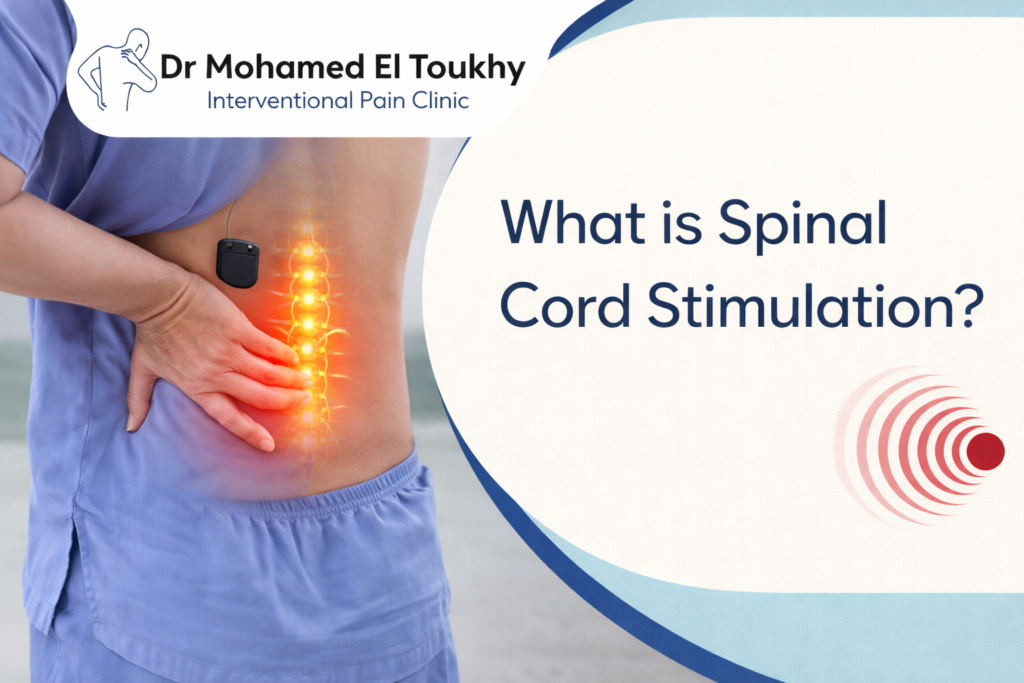
Dealing with chronic pain can wear you out physically, mentally, and emotionally. When pain begins affecting sleep, mobility, work, and everyday life, many patients start searching for long-term solutions beyond painkillers and temporary treatments. One treatment that has transformed chronic pain management in recent years is spinal cord stimulation.
Dr. Mohamed El Toukhy’s patients receive personalised, evidence-based care for chronic pain conditions using advanced interventional pain treatments. Among these, spinal cord stimulation has become an increasingly effective option for people struggling with persistent nerve pain that has not improved with conventional therapies.
What is Spinal cord stimulation?
Spinal cord stimulation is a modern technique used to manage pain, a treatment that uses mild electrical impulses to disrupt pain signals before they are transmitted to the brain. The treatment uses a small device called a spinal cord stimulator, which is placed near the spine. It sends gentle electrical pulses to certain nerves to help lessen chronic pain. While medications often only hide symptoms for a short time, spinal cord stimulation works with the nervous system to change how pain signals are handled. Dr. Mohamed El Toukhy often suggest this treatment for conditions like these:
- Chronic back and leg pain
- Failed back surgery syndrome
- Sciatica
- Nerve pain (neuropathic pain)
- Complex regional pain syndrome (CRPS)
- Peripheral neuropathy
For many patients, spinal cord stimulation can provide significant relief in pain and improve quality of life when other treatments have not been effective.
How is a Spinal cord stimulator implanted?
One of the most common questions patients ask is: how is a spinal cord stimulator implanted?
The procedure is typically carried out in two stages.
Stage 1: Trial Procedure
Before a permanent device is implanted, patients first undergo a temporary trial period. During this stage:
- Thin wires called leads are placed near the spinal cord
- The stimulator remains external
- Patients test the system for several days
This trial is designed to find out if spinal cord stimulation works to provides significant pain relief.
If the trial is successful, patients move on to permanent implantation.
Stage 2: Permanent Implantation
During the second stage, a small pulse generator is implanted under the skin, usually near the lower back or buttock area.
Patients often ask again, how is a spinal cord stimulator implanted permanently? This procedure is minimally invasive and is usually done with local anaesthetic and sedation to keep you comfortable. Most patients return home the same day or shortly afterwards.
How successful is Spinal cord stimulation for pain management?
A major concern for many patients is: How effective is spinal cord stimulation in managing chronic pain?
While results vary depending on the underlying condition, many studies show that spinal cord stimulation can reduce chronic pain by 50% or more in carefully selected patients.
Success often depends on:
- The type of pain being treated
- Accurate diagnosis
- Patient suitability
- Response during the trial period
- Ongoing rehabilitation and follow-up care
Patients who respond well frequently report:
- Better mobility
- Improved sleep
- Reduced reliance on medication
- Greater independence in daily life
Understanding what is the success rate of spinal cord stimulation can help patients feel more confident when exploring advanced pain management options.
What are the side effects of a Spinal cord stimulator?
Like all medical procedures, spinal cord stimulation carries potential risks and complications. Patients commonly ask: what are the side effects of a spinal cord stimulator?
Possible spinal cord stimulator side effects may include:
- You may feel mild discomfort around where the implant is placed.
- There is a risk of infection.
- Some bleeding or swelling may occur.
- The lead may move from its original position.
- The device might not work as expected.
- You might notice tingling sensations.
- Rarely, nerve irritation can happen.
Fortunately, serious complications are uncommon when treatment is performed by experienced specialists. Discussing spinal cord stimulator side effects during consultation allows patients to make informed decisions about their care.
Spinal cord stimulator permanent restrictions: what you should know
Many people worry about lifestyle limitations after implantation and ask about spinal cord stimulator permanent restrictions.
In reality, most patients return to normal daily activities after recovery. However, certain precautions are recommended, particularly during the healing phase.
Temporary or long-term spinal cord stimulator permanent restrictions may include:
- Try not to lift heavy objects at first.
- Avoid twisting or bending your body too much.
- Be sure to follow the safety guidelines for your device when you have an MRI scan.
- Avoiding certain high-impact activities if advised
Most patients find that the benefits of improved pain control far outweigh these restrictions.
How long will a Spinal cord stimulator last?
Another important question patients ask is: how long will a spinal cord stimulator last?
The lifespan depends on the type of device used.
- Rechargeable spinal cord stimulators may last 8–15 years
- Non-rechargeable devices usually last 2–5 years
When the battery eventually needs replacement, the procedure is generally straightforward and less invasive than the original implantation.
Advances in technology continue to improve battery longevity and device performance, helping answer concerns about how long will a spinal cord stimulator last more positively than ever before.
Cost consideration
The spinal cord stimulator cost varies depending on several factors, including:
- Type of device you will use
- Costs for your hospital stay and surgery
- Your follow-upow-up appointments
- What you may need for rehabilitation
- Your insurance or private healthcare coverage
Although the initial spinal cord stimulator cost may seem significant, many patients experience long-term value through improved quality of life and reduced need for ongoing pain medications or repeat procedures.
At Pain Clinic by Dr. Mohamed El Toukhy, patients receive clear guidance about treatment plans, expected outcomes, and associated costs before moving forward.
Ideal candidates for Spinal cord stimulation?
You may be a good candidate for spinal cord stimulation if you:
- Have chronic nerve pain lasting more than six months
- Have not responded to medication or physiotherapy
- Experience ongoing pain after spine surgery
- Want to avoid major surgery
- Are seeking minimally invasive pain relief options
Every patient is different, which is why specialist assessment is essential before treatment.
Take the next step towards long-term pain relief
Living with chronic pain can affect every aspect of life, but advanced treatments like spinal cord stimulation may offer lasting relief when other therapies no longer help. Dr. Mohamed El Toukhy provides compassionate, specialist-led care focused on improving comfort, mobility, and overall quality of life.
Book your consultation today and discover whether spinal cord stimulation could help you regain control of your life.
FAQs
Common spinal cord stimulator side effects may include mild discomfort, swelling, a risk of infection, and temporary tingling sensations. Serious complications are uncommon, especially when the procedure is carried out by experienced specialists.
Many patients experience at least a 50% reduction in pain after successful spinal cord stimulation, particularly when carefully selected through the trial process.
Rechargeable systems can last over a decade, while non-rechargeable devices may need replacement sooner.
Most patients return to normal activities, although some precautions may be recommended during recovery and around certain medical equipment.
Patients first undergo a temporary trial before permanent implantation using a minimally invasive surgical procedure.
The spinal cord stimulator cost depends on the device type, hospital fees, follow-up care, and whether treatment is covered through insurance or private healthcare.
Expert Care by Dr Mohamed El Toukhy
Effective chronic pain management requires expert care. Dr. Mohamed El Toukhy, a leading consultant anesthetist and pain management specialist in Dubai.
His Fellowship and Diploma in Pain Management, as well as other prestigious qualifications and certifications, enable him to follow a comprehensive and evidence-based approach to treating persistent and long-standing pain.
His areas of special interest include:
– Chronic back and neck pain
– Knee and joint pain
– Spinal pain and sciatica
– Neuropathic pain
– Cervical and lumbar pain
– Migraine management
Combining clinical expertise with compassionate care, he customises the treatment plan to relieve his patients’ pain.
If you’re struggling with ongoing discomfort affecting your daily life, it’s time to consult a trusted specialist.
Book your personalised consultation with Dr. Mohamed El Toukhy today and take the first step toward lasting relief.
Related Blogs

What Is Spinal Cord Stimulation?
Dealing with chronic pain can wear you out physically, mentally,
Lumbar facet joint pain vs. Disc pain: 5 Signs it’s your Joints
Back pain is a leading reason people require medical help,
Cervical Neck Ablation Side Effects
Cervical Neck Ablation Side Effects Living with chronic neck pain
